The Dott project on the road!

This week, our Project Archivist Louise tells us about her participation in a conference at the National Archives, Kew:

On Thursday 7th March, LHSA’s Norman Dott case note cataloguing project took its first trip out of Edinburgh to attend the UK Archives Discovery (UKAD) Forum held at the National Archives, Kew. Together with my colleague, Clare Button, Archivist for the Towards Dolly project (cataloguing materials related to the development of animal genetics in Edinburgh), I presented a poster explaining the way in which the Centre for Research Collections has been working to open up history of science records to new researchers.

Clare and I are both funded by the Wellcome Trust, and have been using the Encoded Archival Description (EAD) standard to create catalogues that reflect both the specialist nature of the scientific archives with which we work and the needs of the different groups of researchers who use them. EAD is based on eXtensible Mark-up Language (XML), ‘tags’ that allow text to be labelled and structured for online display. For example, the use of EAD in the Dott project allows me to highlight certain sections of catalogue descriptions for online searches and hide other information from public view that identifies patients.


The poster

The UKAD Forum is a chance to hear current thinking on the different ways in which archives can reach new and current audiences through information technology, enabling them to link data on their collections with other institutions and provide better finding aids for the public. The popularity of the day proved that making archive catalogues available and accessible, promoting collections online and securing the future of digital holdings and electronic records are essential aspects of the archivist’s role in the twenty-first century. Clare and I heard presentations from those at the cutting edge of online delivery of archival material (Google Cultural Institute, Wikipedia, Europeana and the BBC’s Digital Public Space) to smaller archives building up their own online presence through the imaginative use of blogs, Facebook and Twitter. During our poster session, Clare and I answered questions related to our projects and made valuable connections with archivists around the country working with similar records and sharing similar objectives.

All in all, it was a hectic but eye-opening day, and was wonderful to be in a position to tell fellow archivists about the work that LHSA is doing to highlight modern medical case notes as research tools.

Useful Links:

Dott project page: http://www.lhsa.lib.ed.ac.uk/projects/Cataloguingcasenotes.htm

Towards Dolly: http://towardsdolly.wordpress.com/

UKAD Forum 2013: http://www.ukad.org/forum2013/
Fiona's photographic finds so far!


In this blog I will tell you what I have been up to, my plans for the final three weeks, and some interesting things I have found in the collection.

Since the last blog the catalogue is well on its way now with all of the Royal Edinburgh Hospital photographs catalogued and almost 1000 photographs catalogued all together. There was excitement in the office yesterday when our brand new ringbinder boxes and sleeves arrived for rehousing the photograph collection. I cannot wait to get started!

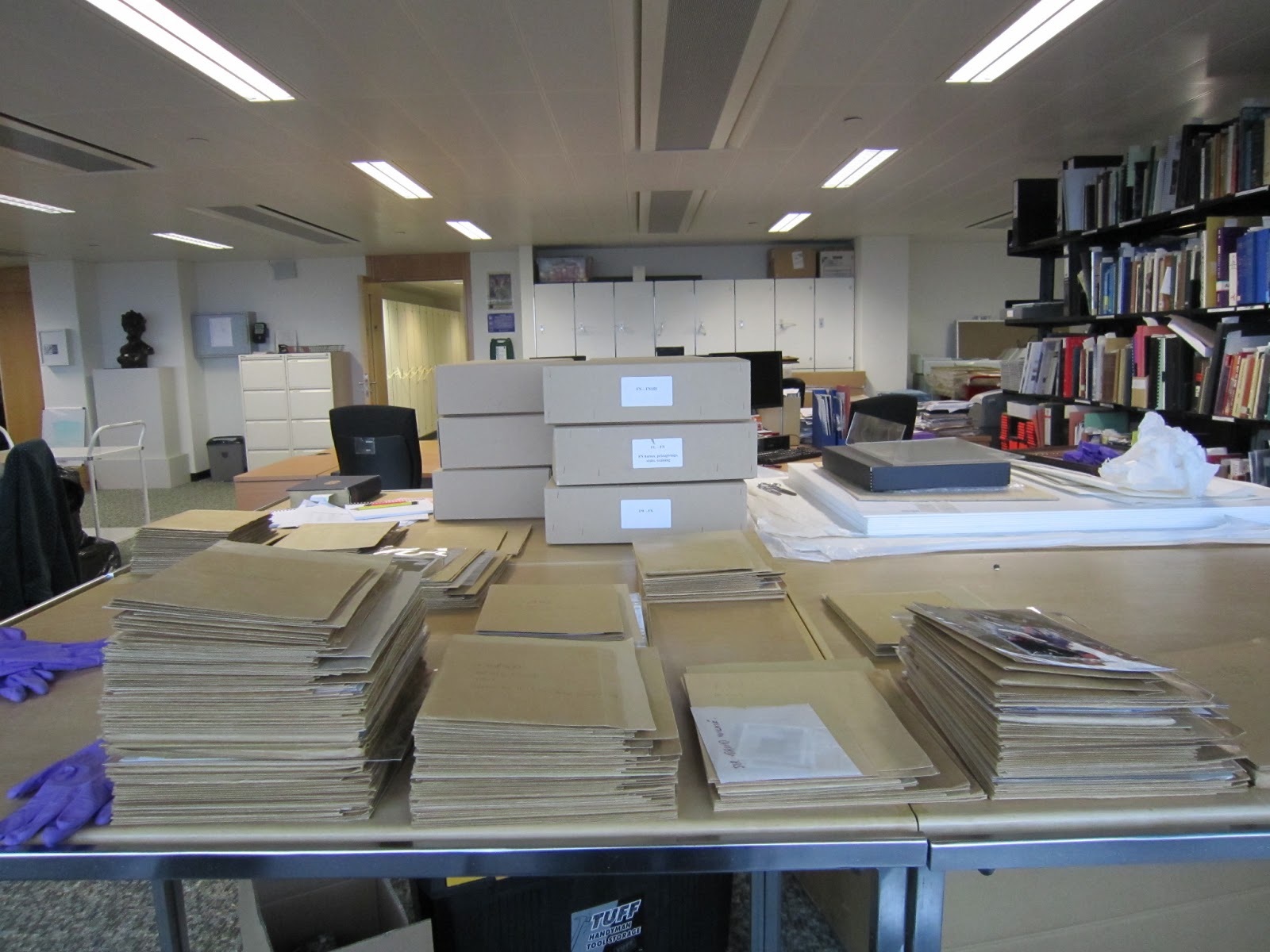
Earlier this week I was lucky enough to receive some help from a couple of our volunteers, Laura and Jessica, who conquered the mammoth task of arranging the Royal Infirmary of Edinburgh photographs ready for cataloguing. They were a great help and saved me two days of tough work! Below you can see a photo of their hard work. 

RIE photos sorted and ready for re-housing
For the next few weeks I will be continuing to catalogue the photograph collection and start rehousing! In my joint blog with Charlotte I will hopefully be able to show you some pictures of our newly rearranged, catalogued and re-housed photographs (I know. It’s all very exciting.)
Please have a look at the photos below to see a couple of the interesting things I have found whilst sorting the photos.

Some nurses serving in Egypt during WWI

Paddling in the sea, 1906 – found in a photo album in one of the dentistry boxes. What this has to do with dentistry I will probably never know, but a pleasant find all the same


City Archives Visit


A few weeks ago, staff from LHSA visited Edinburgh City Archives. Archive intern, Fiona also joined us. We were met by Richard Hunter, Edinburgh City Archivist, who first of all took us out to the storage facilities in Murrayburn Road. These are shared with a well-known records management company, which looks after the City Council’s current records. The archives have been stored in a split-level electronic shelving system and archivist, Peter Clapham showed us around. Some of the fascinating items that we were shown here included bailie court records from the 1720s and architectural plans of the Scotsman offices and the former North British Hotel, now the Balmoral. Peter also showed us that we could check if any of our ancestors had got into trouble with the law in Edinburgh during the 1870s - 1930s, from the police records. We didn’t find any familiar names, fortunately.

Archivist, Richard Hunter in the reading room at City Chambers
Richard then took us back to the Edinburgh City Chambers where many other items are kept. Our project cataloguer of the Norman Dott neurosurgery records, Louise, was delighted to be shown the record of Professor Dott being made a Free Man of the City of Edinburgh in 1962. This is an honour shared with Nelson Mandela and now Sir Chris Hoy. Some medical-related records which the City Archives hold are public health reports, including a case study of immunisation against smallpox from the 1940s, which as Richard explained, gained prominence in the wake of the terrorist attacks in the USA in 2001 for planning a public health response. Other items in the City Chambers which we shown were some of the fine collection of paintings and friezes, which grace the walls and rules for the first known golf tournament from 1744. Thanks to Richard and Peter for the extremely interesting tour – we saw an amazing amount of historical collections in one afternoon. The photo shows Richard relaxing in the reading room near the end of our whirlwind visit.